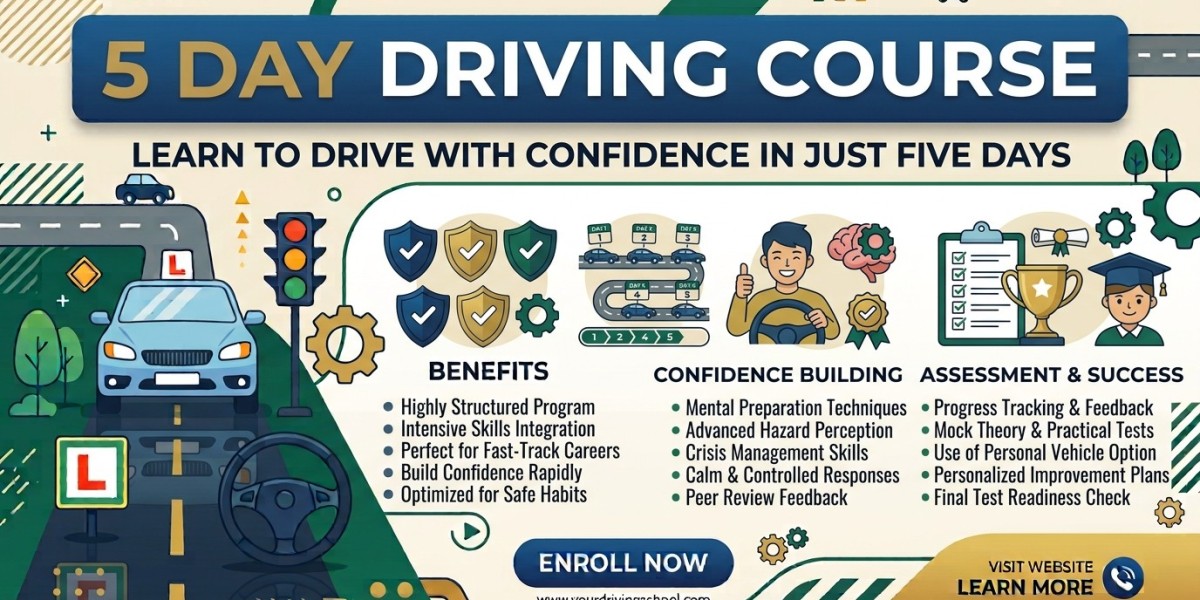

5 Day Driving Course: Learn to Drive with Confidence in Just Five Days
Learning to drive is an important milestone that offers greater independence, flexibility, and convenience in everyday life. However, finding enough time for traditional driving lessons can be challenging, especially for people with busy work schedules, family commitments, or upcoming driving test dates. A 5 day driving course can be a practical solution for learners who want to develop their driving skills through an intensive and structured learning programme.
Instead of spreading lessons over several weeks or months, a five-day driving course allows learners to focus on driving over a shorter period. With regular practice and professional guidance, learners can build confidence, improve their understanding of road safety, and prepare for their practical driving test.
Whether you are a complete beginner or someone who has already gained some driving experience, a five-day course may help you work towards your driving goals more efficiently.
What Is a 5 Day Driving Course?
A 5 day driving course is an intensive driving programme designed to help learners improve their driving ability over five consecutive days or a scheduled five-day period. Depending on the driving school, the course may include several hours of practical driving instruction each day.
The total number of lessons and hours can vary according to the provider, the learner's existing experience, and their individual requirements. Some learners may need additional practice before they are ready for their practical driving test, while others may already have a foundation of driving knowledge.
The main advantage of this type of course is its structured approach. Learners can practise regularly, review their progress with an instructor, and work on areas that require improvement without long gaps between lessons.
A five-day driving course does not automatically guarantee that a learner will pass their test. However, a suitable training programme can help learners develop the skills and confidence required to become safer, more independent drivers.
Who Can Benefit from a 5 Day Driving Course?
A five-day driving course can suit different types of learners, depending on their experience, availability, and learning goals.
Complete Beginners
People who have never driven before may consider an intensive course if they want to learn the fundamentals within a focused timeframe. They will need to understand the vehicle's controls, develop clutch control if learning in a manual car, and practise steering, braking, acceleration, and road positioning.
Beginners may require more training than experienced learners. It is therefore important to discuss your current ability with a driving instructor before choosing a five-day programme.
Learners with Previous Driving Experience
Learners who have already completed some driving lessons may benefit from a five-day course because they can concentrate on improving specific skills. They might already understand basic vehicle control but need additional practice with roundabouts, junctions, parking manoeuvres, or independent driving.
An instructor can assess their ability and recommend a suitable course structure.
Learners Preparing for a Driving Test
If you have already developed reasonable driving skills and have a practical test approaching, an intensive course may help you revise important techniques and address areas that need improvement.
Consistent practice can help you become more familiar with common road situations and improve your ability to make safe decisions under pressure.
What Will You Learn During a 5 Day Driving Course?
The content of a five-day course depends on the learner's starting level and the driving school's teaching approach. However, most programmes focus on essential driving techniques, road awareness, and preparation for independent driving.
Day One: Understanding Vehicle Controls
The first day usually focuses on becoming comfortable behind the wheel. Learners can begin by understanding the vehicle's controls, adjusting their seat and mirrors, checking blind spots, and learning the correct procedures for moving off and stopping safely.
Beginners may also practise steering, acceleration, braking, and changing gears. Manual learners will usually need time to develop clutch control and coordinate the accelerator, clutch, and gear lever.
The instructor can use the first session to identify strengths and weaknesses, helping to establish realistic learning goals for the remaining days.
Day Two: Developing Essential Driving Skills
The second day can focus on improving vehicle control and learning to manage different road situations. Learners may practise approaching junctions, turning left and right, responding to traffic signals, and maintaining an appropriate road position.
Observation is particularly important during this stage. Learners need to check their surroundings regularly, anticipate the actions of other road users, and make decisions without putting themselves or others at risk.
Regular practice helps reinforce the techniques introduced during the first day.
Day Three: Driving in Different Traffic Conditions
By the third day, learners may be ready to practise in a wider variety of traffic conditions, depending on their progress.
These sessions may include navigating roundabouts, dealing with busy junctions, changing lanes safely, and responding to changing speed limits. Learners may also practise driving in residential areas and on faster roads when appropriate.
The aim is to improve hazard awareness, judgement, and the ability to respond calmly to unexpected situations.
Day Four: Manoeuvres and Independent Driving
The fourth day may focus on manoeuvres and more complex driving situations. Depending on the learner's needs, the instructor may practise parallel parking, bay parking, pulling up on the right and reversing, or other relevant manoeuvres.
Learners may also work on independent driving, which involves following road signs or navigation instructions while maintaining safe vehicle control.
This stage can help identify habits that need correcting before the practical test. The instructor may provide feedback on observations, positioning, speed management, and decision-making.
Day Five: Final Practice and Test Preparation
The final day can be used to review previously learned skills and assess readiness for the practical driving test.
A mock test may help learners understand how they perform under test-like conditions. The instructor can observe their driving, identify recurring mistakes, and explain how to correct them.
If the learner is sufficiently prepared, the instructor may recommend proceeding with the practical test when a suitable booking is available. If additional practice is needed, further lessons may be the better option.
The purpose of the final day is to strengthen the learner's skills rather than rush them into taking a test before they are ready.
Benefits of Choosing a 5 Day Driving Course
One of the main benefits of an intensive course is the opportunity to practise regularly. When lessons take place close together, learners can build on what they learned previously and spend less time refreshing skills after long breaks.
A five-day programme can also make scheduling easier for people who can dedicate a specific period to learning. Instead of arranging individual lessons around a busy routine for several weeks, learners can concentrate on driving during a planned block of time.
Another benefit is the opportunity to receive consistent feedback from an instructor. Regular assessments can help learners identify mistakes early and focus on improving the areas that need the most attention.
Intensive learning may also help some learners maintain momentum and become more comfortable with the driving environment. However, the results depend on the learner's experience, concentration, practice time, and ability to absorb new information.
How Many Hours Are Included in a 5 Day Driving Course?
There is no single number of hours that applies to every five-day driving course. Different driving schools offer different packages, and some programmes may include more daily driving time than others.
For example, a course could be structured around several hours of instruction each day, with the total number of hours agreed before training begins. The appropriate amount depends on whether the learner is a beginner or already has driving experience.
Before booking, confirm the total tuition hours, whether breaks are included, and whether the course is suitable for your current ability. It is also worth checking whether the instructor recommends an assessment lesson before the programme starts.
Choosing a course based on your actual training needs is more important than simply selecting the package with the most hours.
How to Choose the Right Driving School
Selecting a suitable driving school is an important part of preparing for an intensive driving course. Look for qualified instructors who have experience teaching learners at your current level.
It is helpful to ask how the five-day programme is structured and whether the instructor will adapt lessons to your progress. A good course should provide constructive feedback and allow enough time to practise essential skills safely.
You should also confirm the total cost, cancellation policy, availability of manual or automatic lessons, and whether the practical test fee is included. If you intend to take your test shortly after completing the course, check test availability before making a booking.
A reputable driving school should explain what the package includes and avoid guaranteeing a pass. The purpose of professional instruction is to help you become a competent and safe driver, not simply to prepare you to complete a test.
Tips for Getting the Most from Your Five-Day Course
Preparation can make a difference to your learning experience. Before starting the course, make sure you understand the basic requirements for learning to drive in the UK, including holding the appropriate provisional driving licence.
Try to get enough rest before each lesson so that you can concentrate and respond effectively to your instructor's guidance. Listen carefully to feedback, ask questions whenever something is unclear, and focus on correcting mistakes rather than becoming discouraged by them.
Between lessons, reviewing road signs, the Highway Code, and common driving scenarios can reinforce what you have practised. You should also discuss any concerns with your instructor, particularly if you feel nervous in busy traffic or struggle with a particular manoeuvre.
Most importantly, remain realistic about your progress. Some learners may be ready for a test after five days, while others will need additional lessons. Learning at a safe and appropriate pace is essential.
Is a 5 Day Driving Course Worth It?
A five-day driving course can be a worthwhile option for learners who want a concentrated learning experience and have enough time to commit to regular lessons. It can be especially useful for people with previous experience who need to improve their skills or prepare for an upcoming practical test.
However, an intensive course may not suit everyone. Complete beginners can find it demanding to absorb a large amount of information over a short period, and some learners benefit from taking lessons at a slower pace.
The best choice depends on your confidence, previous experience, availability, and learning style. An initial assessment with a qualified instructor can help you decide whether a five-day programme is suitable or whether a longer course would be more effective.
Frequently Asked Questions About a 5 Day Driving Course
Can I learn to drive in five days?
It is possible to make substantial progress in five days, particularly if you already have some driving experience. However, complete beginners may need more training to develop the necessary skills. Your progress will depend on your learning ability, the number of tuition hours, and the quality of instruction.
Is a 5 day driving course suitable for beginners?
Yes, some driving schools offer intensive courses for complete beginners. However, you should confirm that the programme includes enough tuition for someone with no previous experience. An instructor may recommend additional lessons if you need more time to develop safe driving habits.
Can I pass my driving test after a five-day course?
You may be able to take and pass your practical test after completing a five-day course if you reach the required standard. Passing is not guaranteed, and you should only take the test when your instructor believes your driving is safe and consistent. Test availability must also be considered.
How many driving lessons will I receive in five days?
The number of lessons depends on the driving school's package. Some courses provide several hours of tuition each day, while others offer different arrangements. Always confirm the total number of driving hours before booking.
Is an intensive driving course better than weekly lessons?
An intensive course provides regular practice over a short period, while weekly lessons allow more time to absorb information between sessions. Neither approach is automatically better for everyone. The right option depends on your experience, schedule, confidence, and learning preferences.
Can I choose between manual and automatic driving lessons?
Many driving schools offer manual and automatic instruction, although availability varies by provider. Your choice should depend on your preferences and future driving needs. Remember that passing your UK practical test in an automatic car generally restricts you to driving automatic vehicles unless you later pass the relevant manual test.
Does a 5 day driving course include the practical test?
Not necessarily. Some packages may include help with test preparation, while others may charge separately for the practical test or use of the instructor's car during the test. Check the package details before making a payment.
What happens if I am not ready to take my test after five days?
If your instructor identifies areas that require improvement, you may need additional lessons before taking the test. This is a normal part of learning to drive. Continuing your training can help you develop safer habits and improve your confidence.
How should I prepare for a five-day driving course?
Make sure you have the required provisional driving licence, understand the course schedule, and arrive rested and ready to learn. Reviewing road signs and the Highway Code can also help you understand the rules you will practise during lessons.
Is a 5 day driving course suitable for nervous drivers?
It may be suitable for some nervous drivers, particularly those who prefer consistent practice. However, an intensive schedule can feel demanding for others. Discuss your concerns with an instructor and choose a course that provides supportive guidance and enough time to build confidence safely.
Conclusion
A 5 day driving course offers a focused way to develop driving skills, improve road awareness, and prepare for the practical driving test. With structured lessons, regular practice, and professional feedback, learners can work towards becoming safer and more confident drivers.
Before choosing a course, consider your current experience, the total number of tuition hours, your availability, and the support offered by the driving school. Remember that completing a course in five days does not guarantee a test pass. The most important goal is to develop the knowledge, judgement, and practical skills needed for safe and independent driving.